Rust
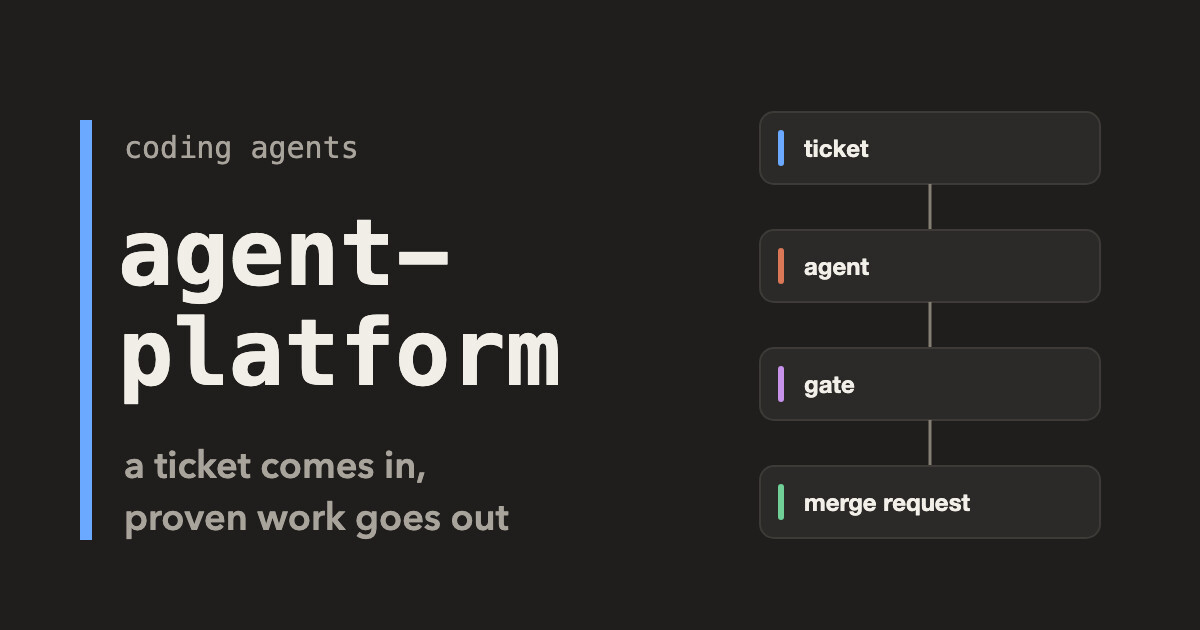
agent-platform: Coding Agents That Work Unattended
My sdd workflow works because I’m there: I start each phase, read the plan, and check the result. The next question was what happens when nobody is there. Can a ticket in a project tracker turn into a merge request on its own, without anyone copying it into a terminal, and without taking the agent’s word that it works? That’s agent-platform: a platform for building coding agents that work unattended. One Rust engine runs every agent. Each agent is a folder of configuration and skills, and each repo opts in with one file. The agent harness inside is Claude Code today, but very little of the platform depends on that: it could as well be Pi or Codex. ...
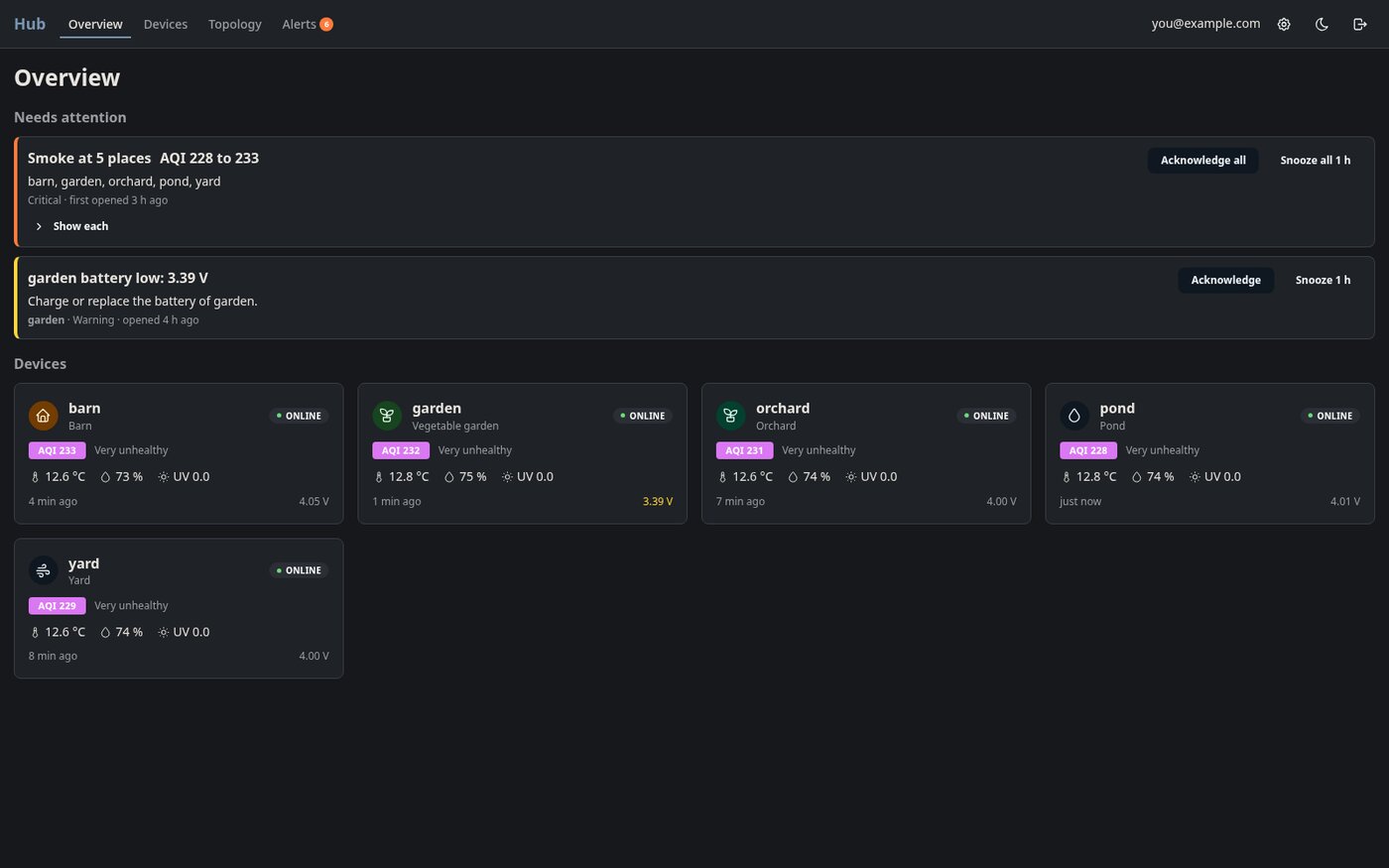
Reviving an IoT Project: thetalink
This project started back in 2022, when I built air quality monitors connected to Home Assistant: small devices running on solar panels and batteries. The idea behind them was bigger than air quality. Sensors like these could watch a greenhouse and act on it, track the weather, or monitor pretty much anything you care about. What really interested me was applying that to beekeeping and farming. In 2025 I took a step in that direction, monitoring my plants over LoRa, a long-range radio, with a valve for watering. Then both projects sat there. ...

Codex, Nine Months In
In May I wrote Codex, Three Months In. Codex had just replaced Komga on my server, and the big new thing was release tracking. Since then: a 2.0 release, a new way of tracking reading progress, support for running several instances, and a native iOS client that’s almost ready for the App Store. Here’s what mattered. Reading progress that doesn’t go backwards The most important change is one you’d never see in a screenshot. ...

Tsundoku Update: Closing the Loop with Codex
Since I introduced Tsundoku in June, most of what changed is small, but one thing is worth a post: Tsundoku and Codex now talk to each other in both directions. Codex and Tsundoku, both ways In June the integration went one way. Tsundoku read Codex’s series index (read-only, with an API key) so it could mark which series I already own and focus on the ones I don’t. Now it goes the other way too. ...
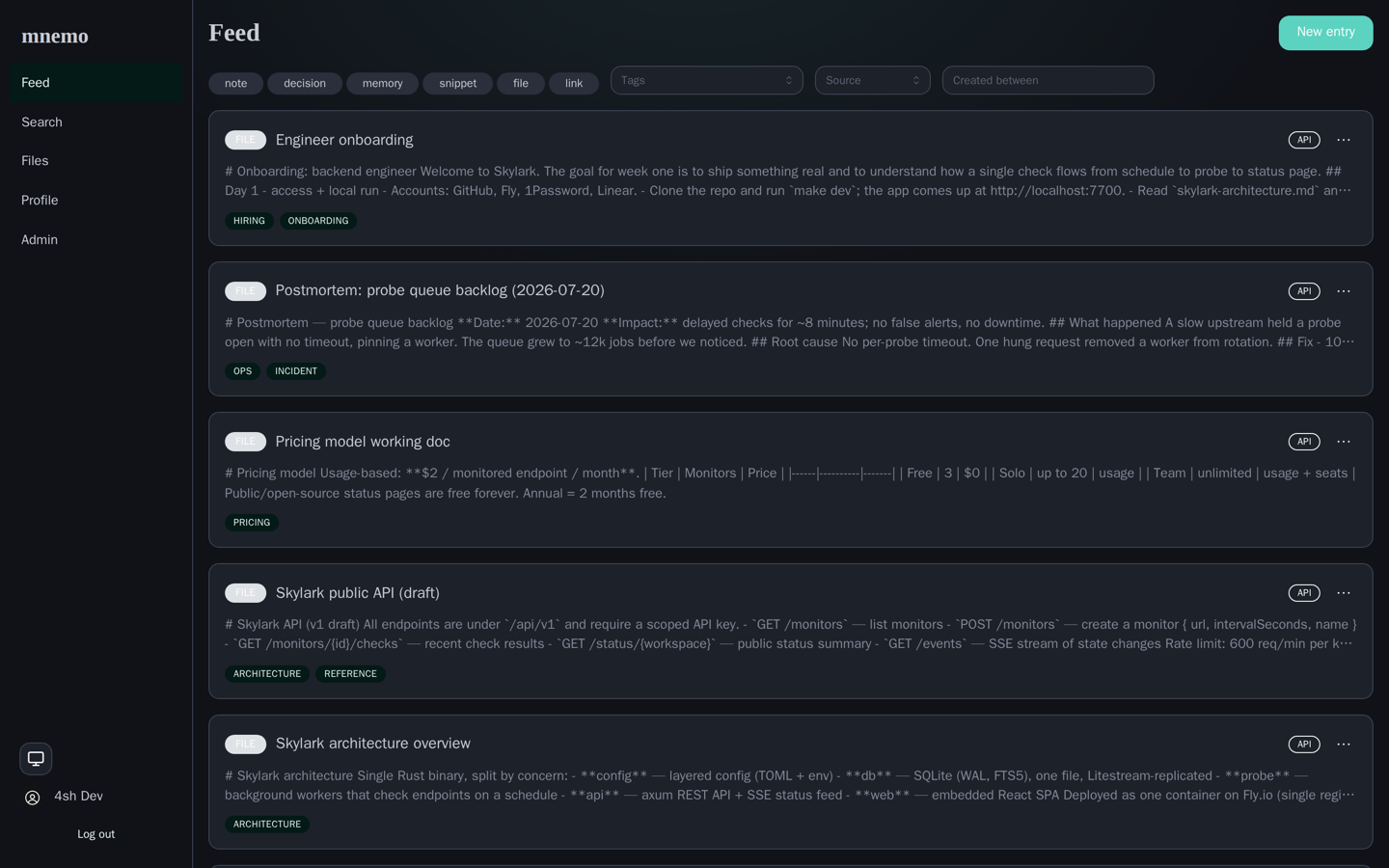
Building Mnemo: A Memory Layer My Agents and I Share
Every project I’ve written about this year produced the same kind of leftover: decisions. Why Tsundoku identifies series the way it does. Why Codex plugins talk over stdio. Why the third attempt at a library server used SQLite. Each took an evening of thinking, and each lived in exactly one place: whatever chat window I had open at the time. That’s the problem Mnemo solves. The line at the top of its PRD is: context is the most valuable thing you produce, and it currently lives nowhere. It’s spread across chat projects that don’t talk to each other, markdown files I forget I wrote, and notes apps that no agent can reach. ...

Building Tsundoku: Turning a Firehose of Manga Releases into a Browsable Backlog
積ん読 (tsundoku) is the Japanese word for the habit of acquiring books and letting them pile up unread. It’s an affectionate kind of self-deprecation, and it’s an uncomfortably accurate description of how I read manga. There’s always a new series I’ve heard is good, a sequel that just got a fresh volume, a thing someone mentioned in passing that I meant to look into. The pile only grows. A few months ago I wrote about Codex, the Rust digital library server I built to manage the comics, manga, and ebooks I already own. Codex is great at the “own” part. It scans my files, fetches metadata, tracks what I have. But it has nothing to say about the part that actually feeds the collection: discovery. What’s new? What got a new volume since I last looked? What have I been meaning to start but never got around to? ...

Codex, Three Months In
Three months ago I wrote about why I was building Codex: years of daily Komga use, a few stubborn limitations, and two previous attempts at building my own digital library server that fizzled out somewhere in the middle. The post was speculative in places. The core was working, but a lot of “what’s next” was still on a list. This is the follow-up. Three months of daily use later, here’s what changed, what shipped, and what I learned. ...
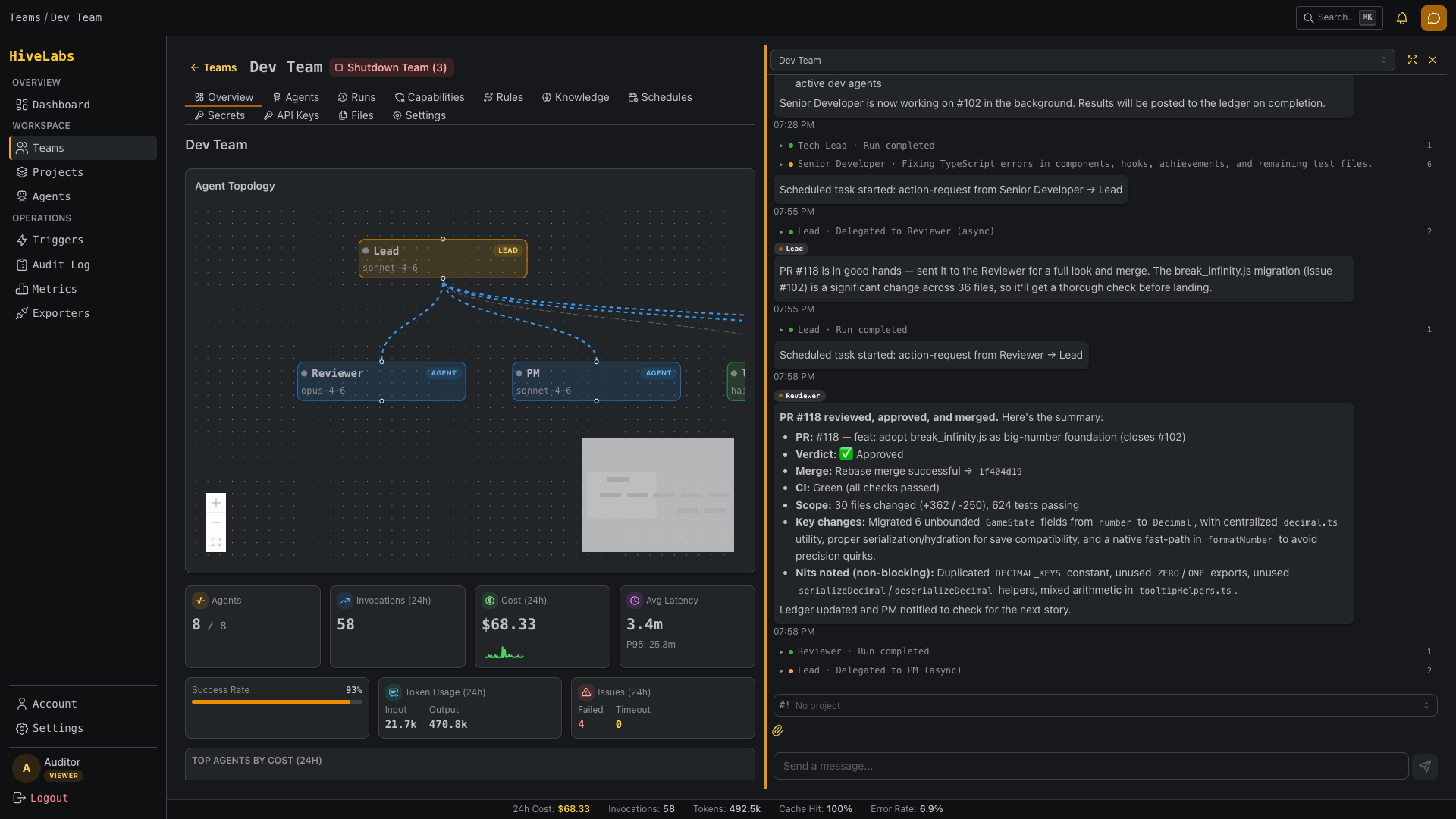
Building HiveLabs: Taking the AI Agent Team Concept to Production
A couple of weeks ago I wrote about 4shClaw, a personal multi-agent AI assistant running with Docker. It works. Agents spin up in containers, coordinate through a shared ledger, and build a game called GLORP autonomously. The architecture proved out the core ideas: container isolation, declarative capabilities, ephemeral agents, lead-agent orchestration. But 4shClaw is a personal tool. Single user, SQLite, filesystem IPC, Node.js host. That’s fine for me. It’s not fine for a team of five engineers at a fintech company who want the same thing on their infrastructure, with audit trails their compliance team will accept. ...

Why I'm Building Codex: A Digital Library Server in Rust
I love Komga. It’s been my go-to for managing comics, manga, and ebooks for years, and it genuinely does the job well. The UI is clean, the feature set is rich, and the community around it is great. If you self-host a digital reading collection and haven’t tried it, you should. But after years of daily use, I kept bumping into a few limitations that I couldn’t work around. And eventually, the itch to build something of my own became too strong to ignore. ...