Claude
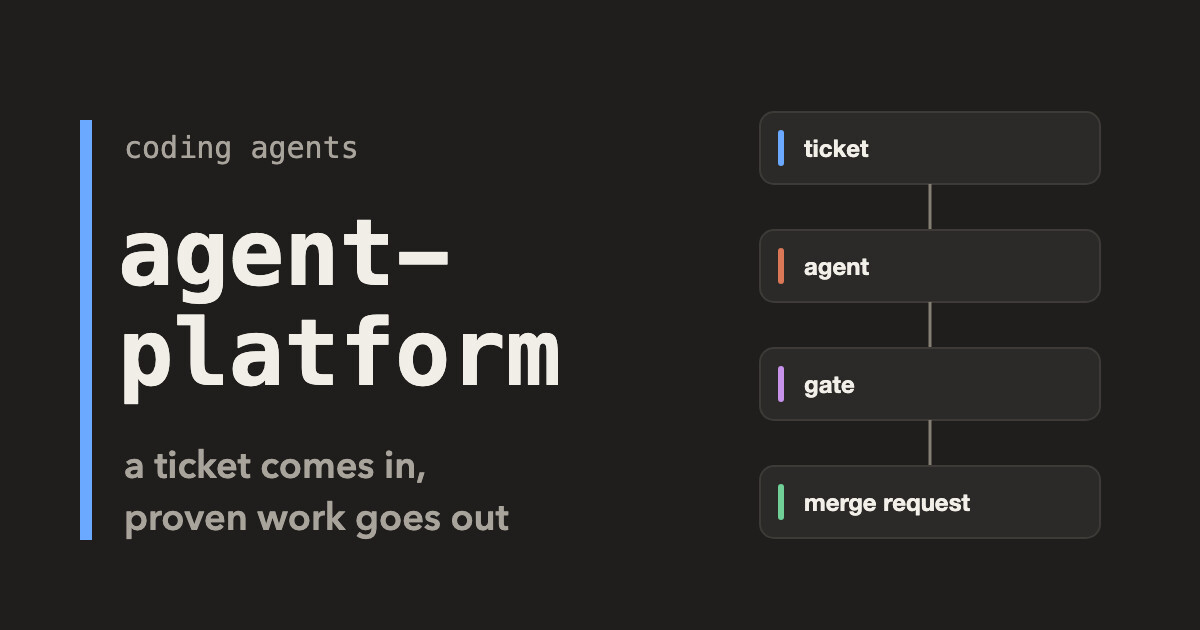
agent-platform: Coding Agents That Work Unattended
My sdd workflow works because I’m there: I start each phase, read the plan, and check the result. The next question was what happens when nobody is there. Can a ticket in a project tracker turn into a merge request on its own, without anyone copying it into a terminal, and without taking the agent’s word that it works? That’s agent-platform: a platform for building coding agents that work unattended. One Rust engine runs every agent. Each agent is a folder of configuration and skills, and each repo opts in with one file. The agent harness inside is Claude Code today, but very little of the platform depends on that: it could as well be Pi or Codex. ...
Building delegation: Routing Work Across Models, Accounts and a Local GPU
The sdd plugin is about what gets built and how it’s verified. Its sibling, delegation, is about who does the work. It started as a few subagent definitions and some notes on model tiering, and grew into a plugin that can also send work outside the Claude account I’m sitting in. Matching the model to the work The core of the plugin is a set of agents, each tied to a model tier that fits the kind of work it does: ...
Building sdd: A Spec-Driven Workflow That Enforces Itself
Almost every project I’ve written about this year, Codex, Tsundoku, Kiln, Mnemo, was built the same way: a PRD, broken into phase specs, broken into task files, implemented one task at a time with Claude Code doing most of the typing. That workflow started as a handful of personal slash commands, and it’s now a proper Claude Code plugin called sdd. This post is about what it does, and about the part that took the most work: making it enforce itself. ...
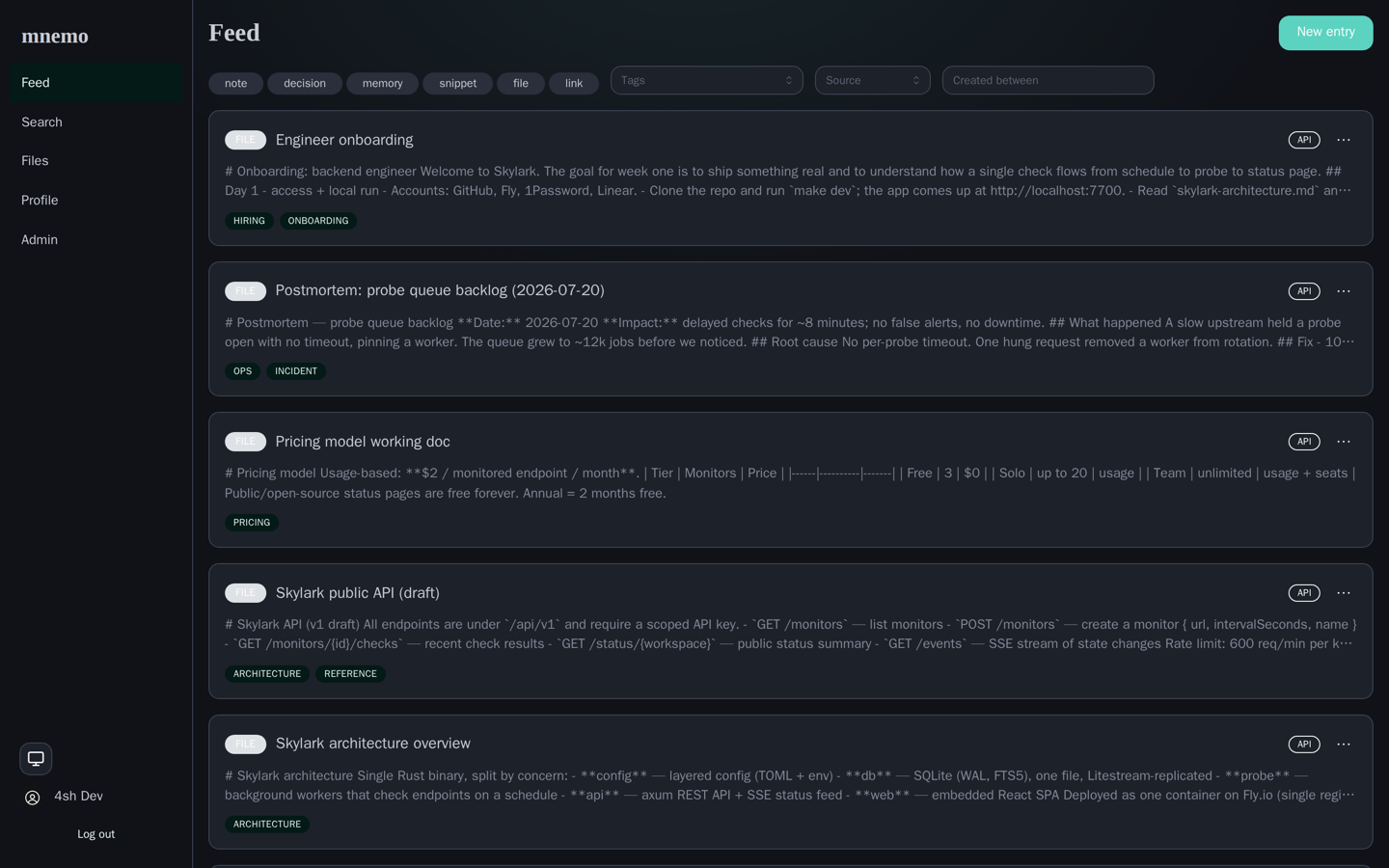
Building Mnemo: A Memory Layer My Agents and I Share
Every project I’ve written about this year produced the same kind of leftover: decisions. Why Tsundoku identifies series the way it does. Why Codex plugins talk over stdio. Why the third attempt at a library server used SQLite. Each took an evening of thinking, and each lived in exactly one place: whatever chat window I had open at the time. That’s the problem Mnemo solves. The line at the top of its PRD is: context is the most valuable thing you produce, and it currently lives nowhere. It’s spread across chat projects that don’t talk to each other, markdown files I forget I wrote, and notes apps that no agent can reach. ...
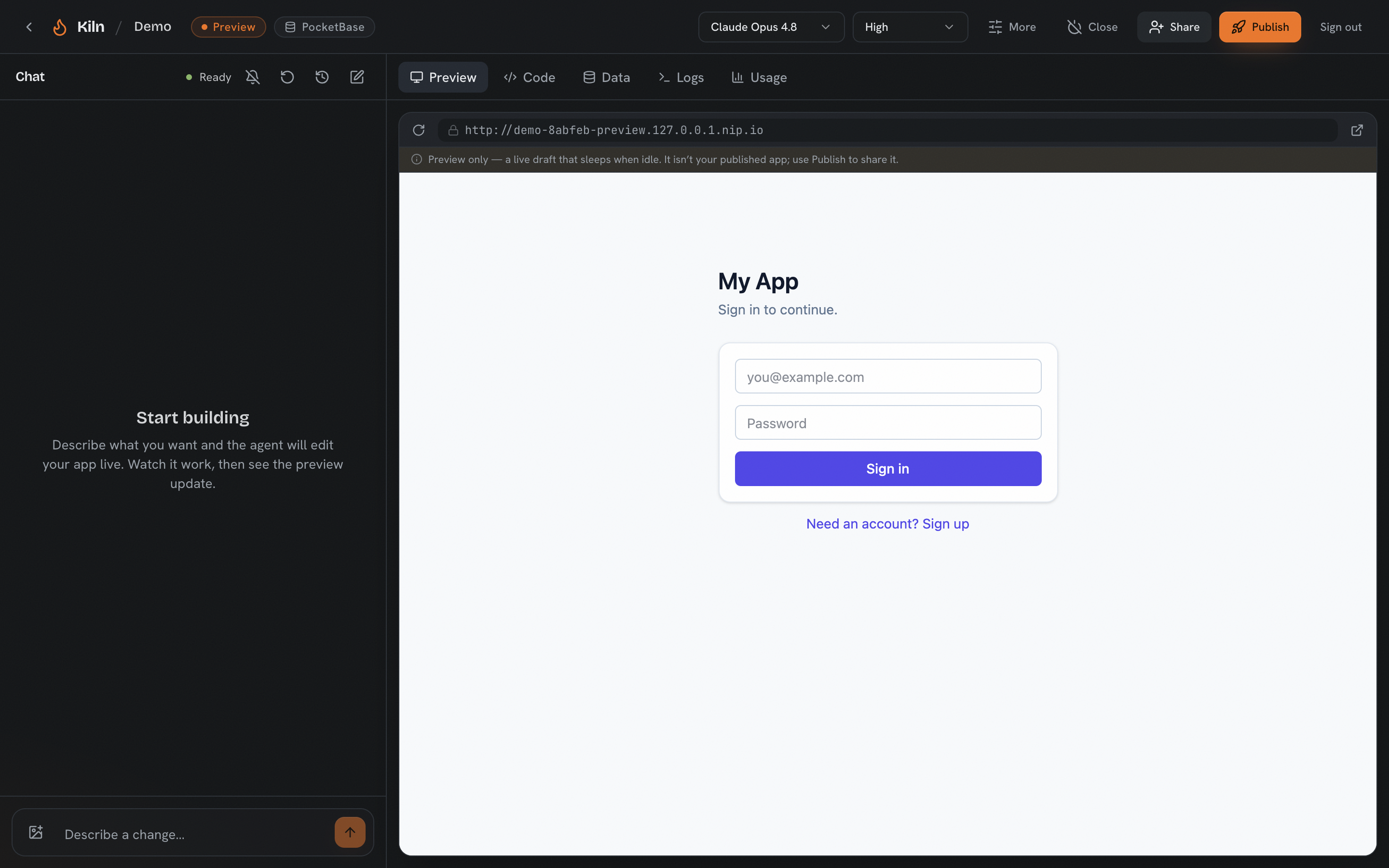
Building Kiln: A Self-Hosted App Builder That Never Leaves Your Infrastructure
Lovable, v0, Bolt: they all nailed the same loop. You describe an app in chat, an agent writes the code, and a live preview updates while you watch. It feels like magic the first time. Then you try to use it for something real at work and hit the wall: your prompts, your source, and your data all live on someone else’s cloud. For a lot of internal tools that’s a non-starter. The prototype a PM wants to spin up touches customer records. The dashboard someone needs by Friday runs against a production-adjacent database. You can’t paste that into a SaaS build tool and hope for the best. ...
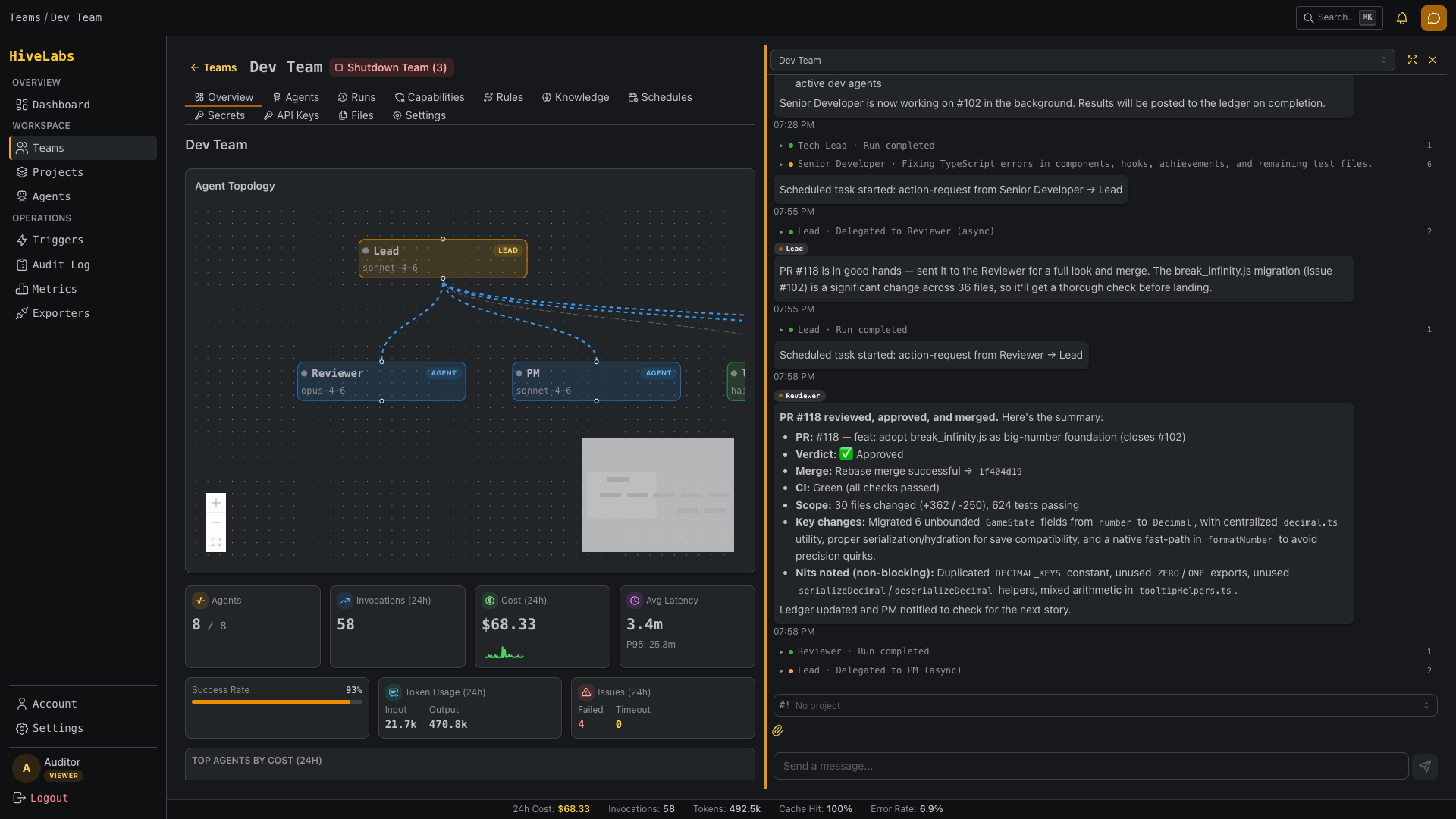
Building HiveLabs: Taking the AI Agent Team Concept to Production
A couple of weeks ago I wrote about 4shClaw, a personal multi-agent AI assistant running with Docker. It works. Agents spin up in containers, coordinate through a shared ledger, and build a game called GLORP autonomously. The architecture proved out the core ideas: container isolation, declarative capabilities, ephemeral agents, lead-agent orchestration. But 4shClaw is a personal tool. Single user, SQLite, filesystem IPC, Node.js host. That’s fine for me. It’s not fine for a team of five engineers at a fintech company who want the same thing on their infrastructure, with audit trails their compliance team will accept. ...
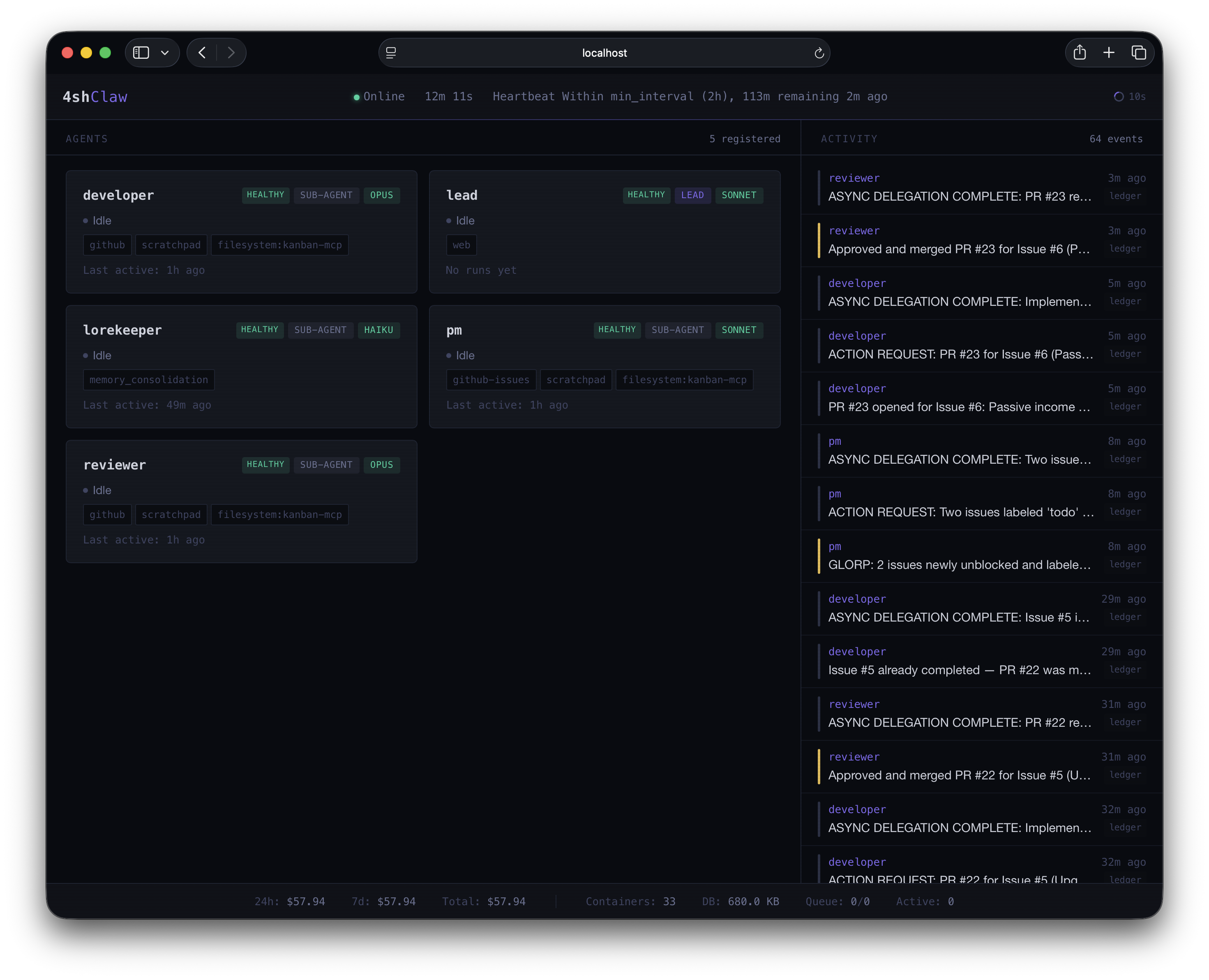
Building 4shClaw: A Multi-Agent AI Assistant That Runs Your Life (and Builds Its Own Demo)
I’ve been trying to build personal AI assistants on and off for a while. Bots backed by LLM APIs, cron jobs that would run some automated task. None of them stuck really. Then OpenClaw came along and kicked off the personal AI assistant movement. It looked like what I wanted, until I looked under the hood. The thing wants access to everything: your email, your calendar, your GitHub, your files, all funneled through a single Node.js process with shared memory and no real isolation. One bad prompt injection through an email summary could, in theory, access your GitHub token, your calendar credentials, and every other secret the system knows about. That’s not a hypothetical either: multiple critical CVEs in 2026 alone, all stemming from the same architecture. ...