Agents
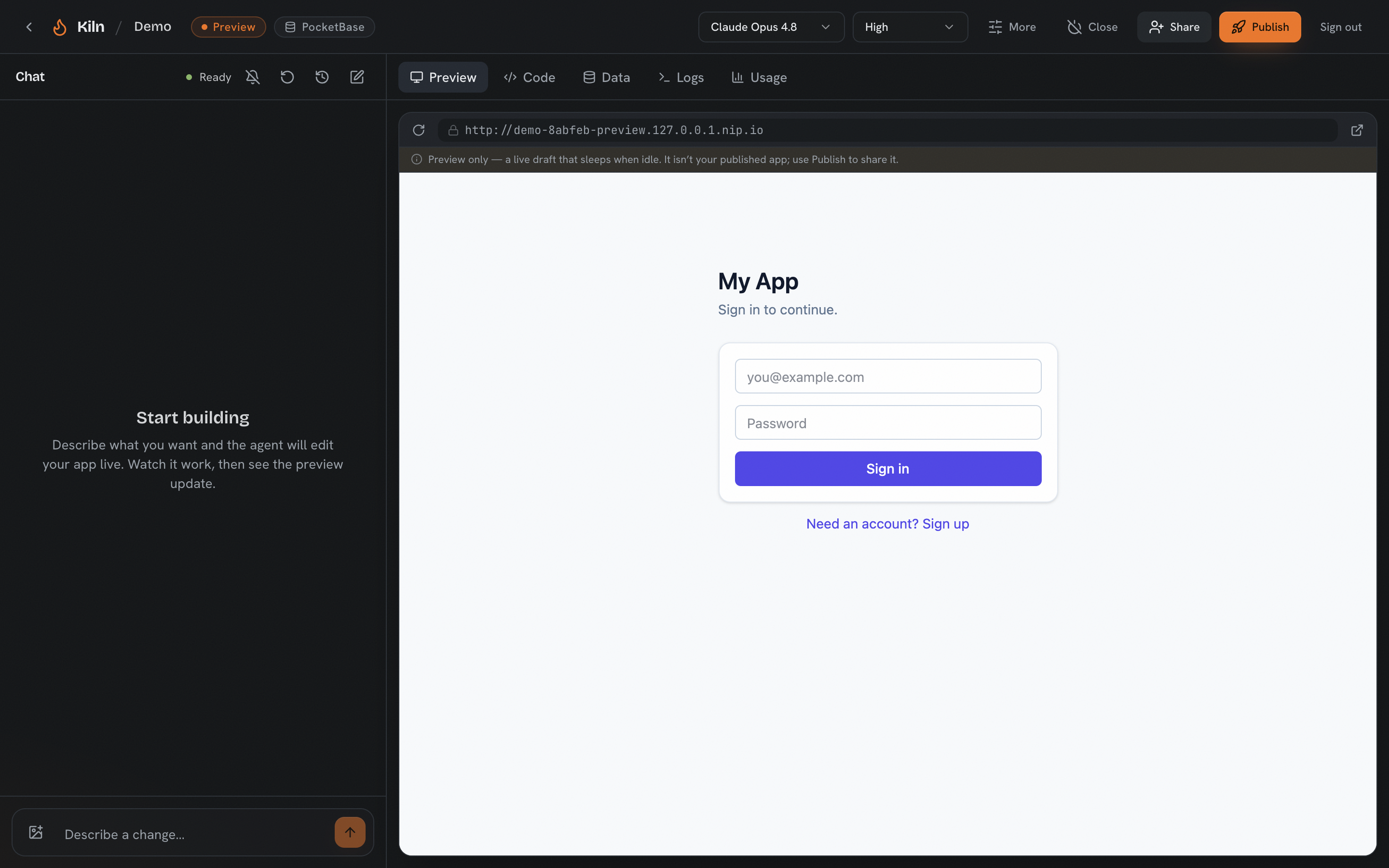
Building Kiln: A Self-Hosted App Builder That Never Leaves Your Infrastructure
Lovable, v0, Bolt: they all nailed the same loop. You describe an app in chat, an agent writes the code, and a live preview updates while you watch. It feels like magic the first time. Then you try to use it for something real at work and hit the wall: your prompts, your source, and your data all live on someone else’s cloud. For a lot of internal tools that’s a non-starter. The prototype a PM wants to spin up touches customer records. The dashboard someone needs by Friday runs against a production-adjacent database. You can’t paste that into a SaaS build tool and hope for the best. ...
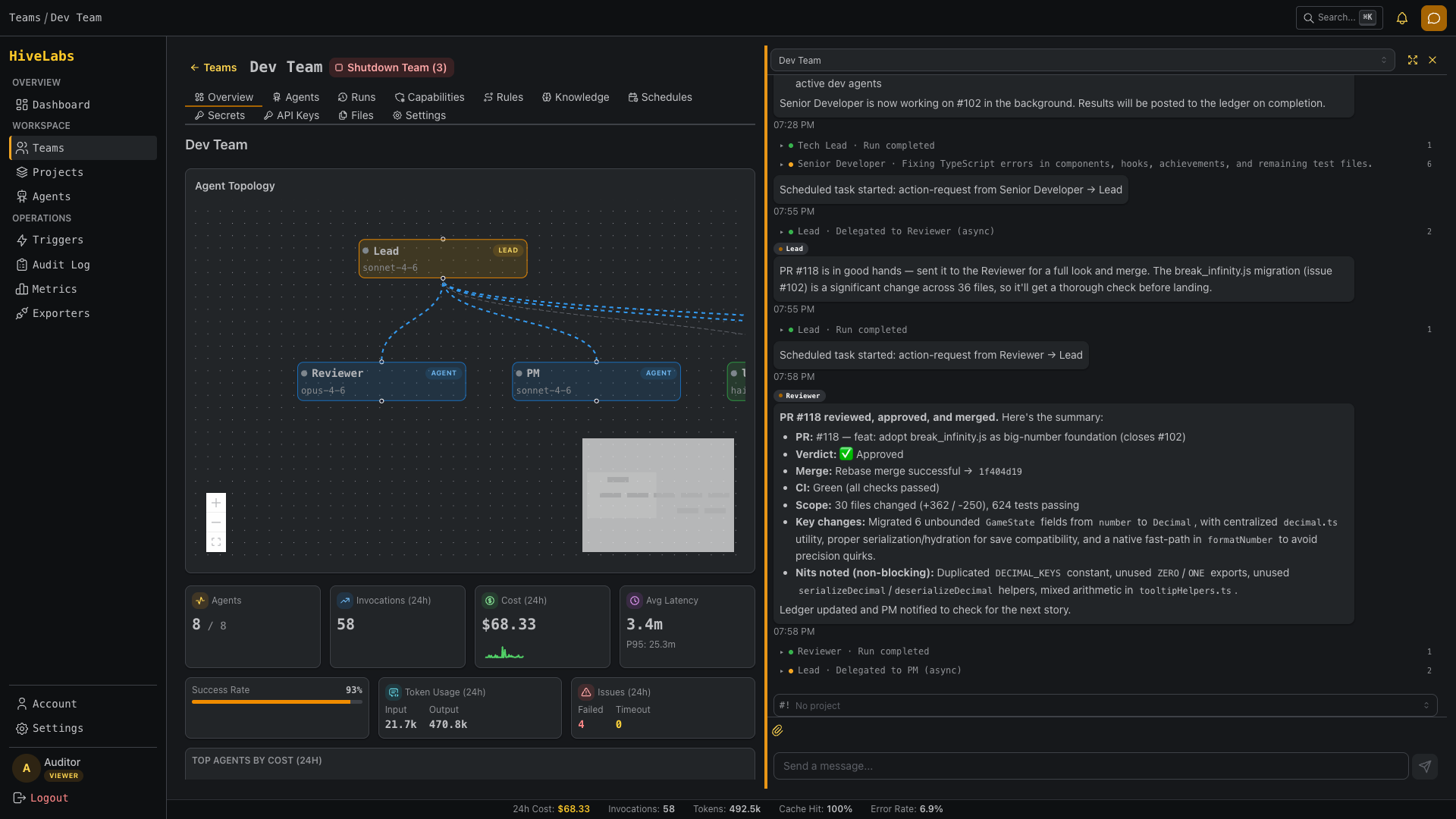
Building HiveLabs: Taking the AI Agent Team Concept to Production
A couple of weeks ago I wrote about 4shClaw, a personal multi-agent AI assistant running with Docker. It works. Agents spin up in containers, coordinate through a shared ledger, and build a game called GLORP autonomously. The architecture proved out the core ideas: container isolation, declarative capabilities, ephemeral agents, lead-agent orchestration. But 4shClaw is a personal tool. Single user, SQLite, filesystem IPC, Node.js host. That’s fine for me. It’s not fine for a team of five engineers at a fintech company who want the same thing on their infrastructure, with audit trails their compliance team will accept. ...
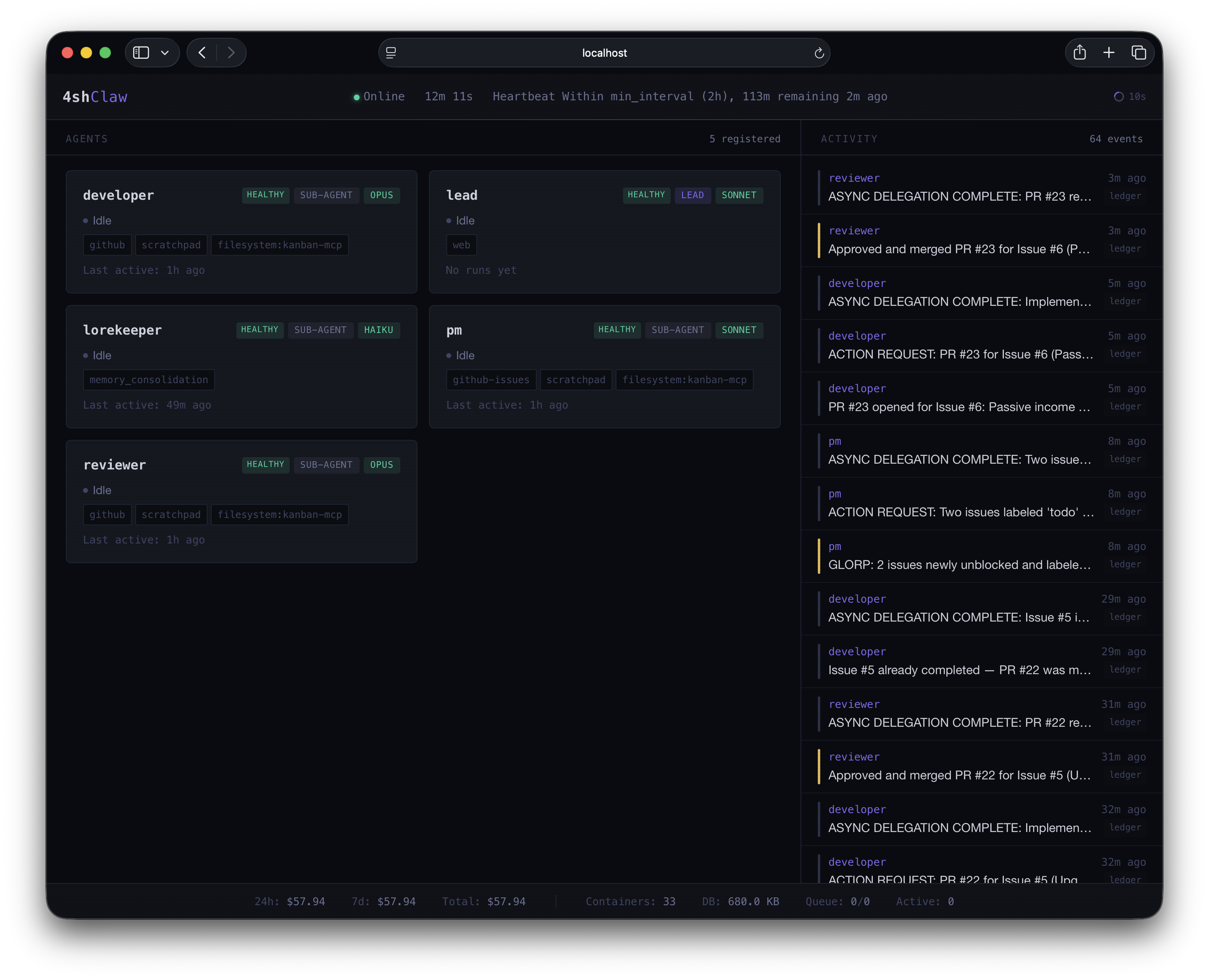
Building 4shClaw: A Multi-Agent AI Assistant That Runs Your Life (and Builds Its Own Demo)
I’ve been trying to build personal AI assistants on and off for a while. Bots backed by LLM APIs, cron jobs that would run some automated task. None of them stuck really. Then OpenClaw came along and kicked off the personal AI assistant movement. It looked like what I wanted, until I looked under the hood. The thing wants access to everything: your email, your calendar, your GitHub, your files, all funneled through a single Node.js process with shared memory and no real isolation. One bad prompt injection through an email summary could, in theory, access your GitHub token, your calendar credentials, and every other secret the system knows about. That’s not a hypothetical either: multiple critical CVEs in 2026 alone, all stemming from the same architecture. ...