
Since I introduced Tsundoku in June, most of what changed is small, but one thing is worth a post: Tsundoku and Codex now talk to each other in both directions.
Codex and Tsundoku, both ways
In June the integration went one way. Tsundoku read Codex’s series index (read-only, with an API key) so it could mark which series I already own and focus on the ones I don’t.
Now it goes the other way too.
Tsundoku feeds Codex. Tsundoku knows which volumes and chapters are available for each series. A new Codex plugin asks it about the series I track, and new volumes show up in Codex’s release inbox next to the other release sources. Series are matched by their IDs on metadata sites like MangaBaka and AniList, never by title, so a similar name can’t cause a false match.
Codex links to Tsundoku. A series in Codex now has a button that opens its page in Tsundoku.
The result is one loop. Tsundoku finds series I don’t own yet. Once I start collecting one and track it in Codex, Tsundoku’s data tells Codex when new volumes come out.
Finding what the feed doesn’t show
The rest of the update is about series that never appear in the release feed, such as something I heard about whose last release was years ago:
- Wishlist. I can add a series straight from MangaBaka, even if Tsundoku has never seen a release for it.
- Per-series search. A button on the series page searches for releases by the series’ titles, including alternate and non-Latin ones. Results go through the normal matching pipeline, so nothing is linked by force.
- Paste a URL. If I already know the post, I can paste its link and Tsundoku imports just that release.
Smaller additions: a mobile layout, bulk actions on series cards, and a catalog export (JSON, CSV or Markdown) meant for handing my backlog to an LLM and asking what to read next.
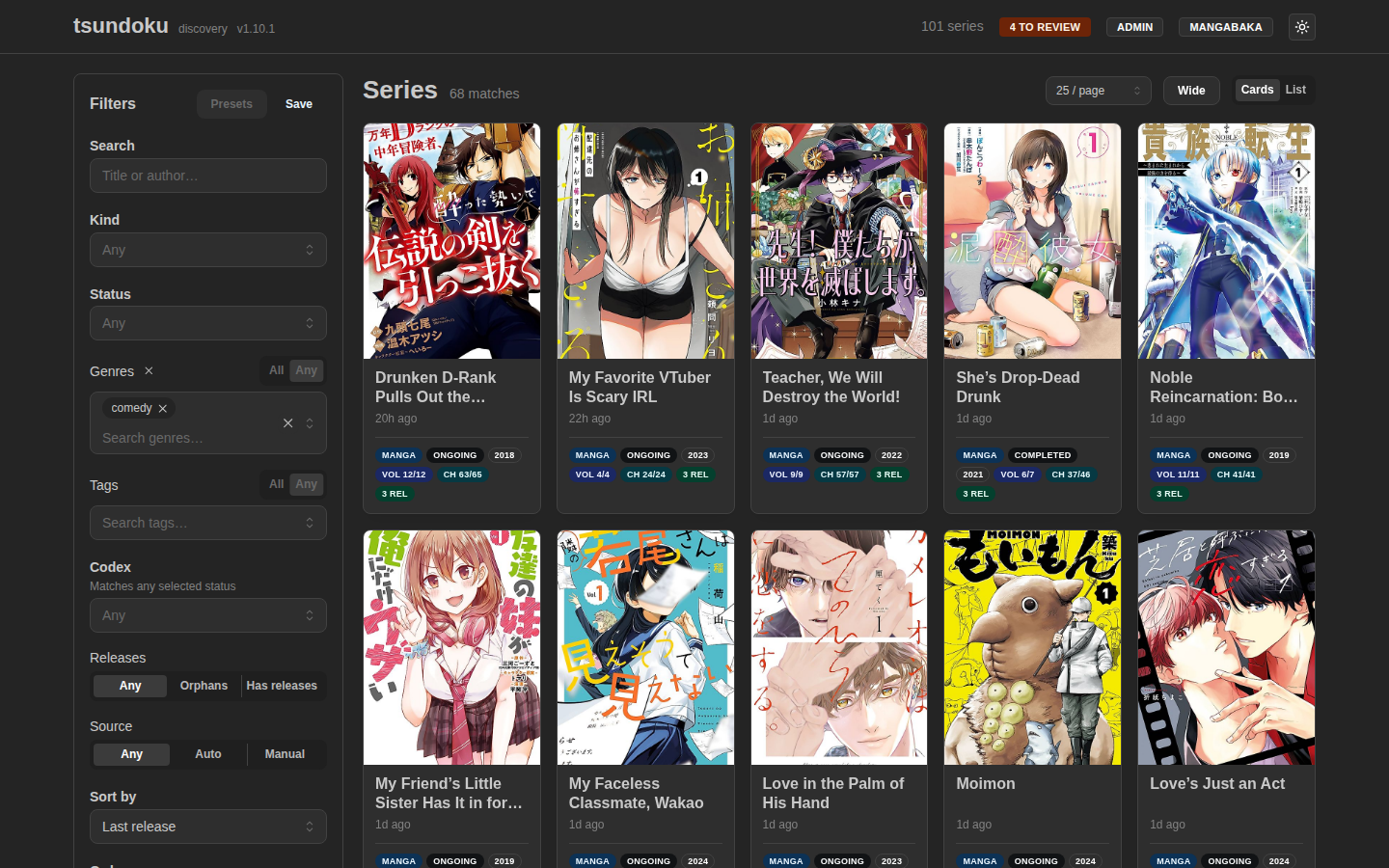
The browse page. It hasn’t changed much on the surface; most of the work was underneath.
The code is on GitHub and the docs are at tsundoku.4sh.dev.