Two weeks ago I wrote about Idle Beekeepers and mentioned it was a spin-off of a bigger game. This is that game.
Beekeepers is a calm management game about real beekeeping, built in Godot, and it’s close to the end.

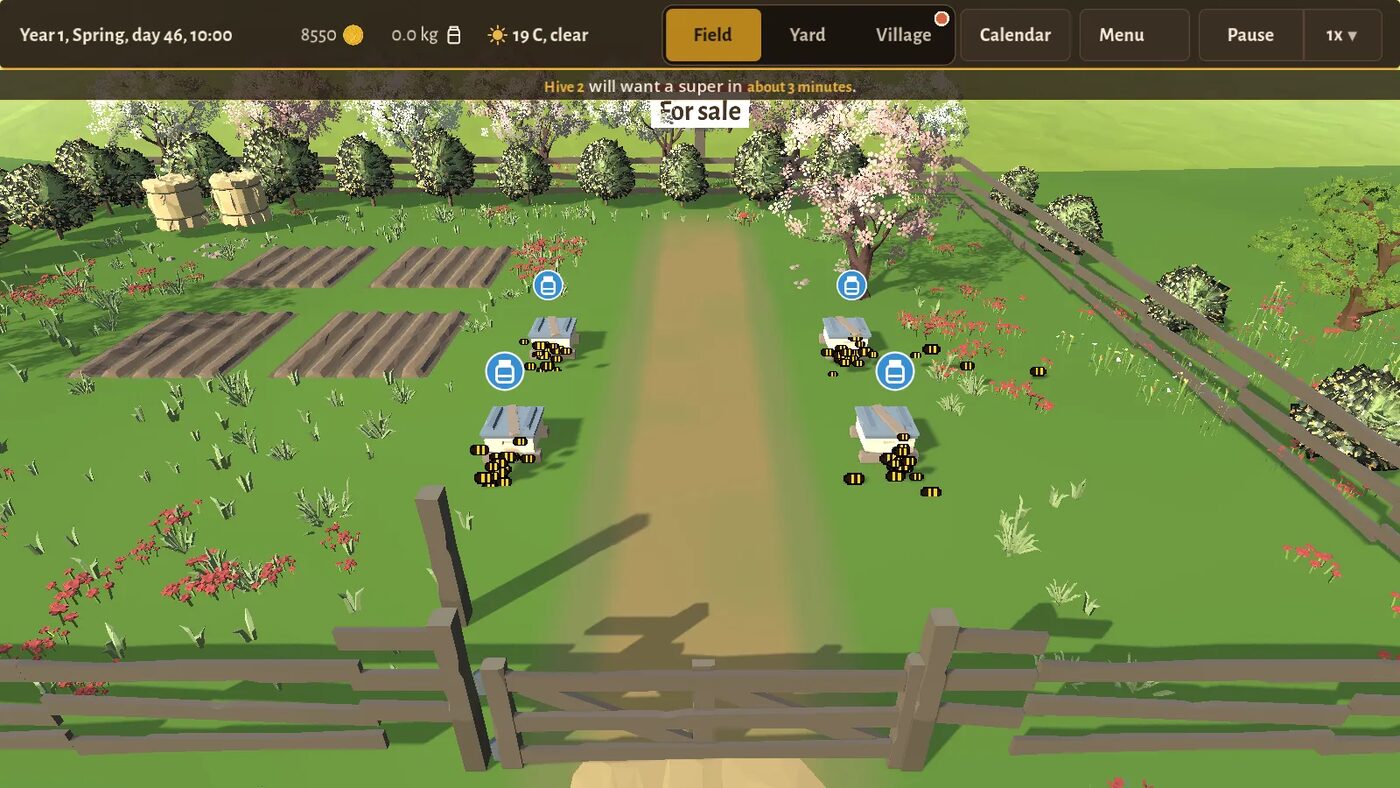
The field in spring: two hives, planting plots, and a banner saying what needs doing next and when.
Same world, different game
Both games start the same way: you quit your desk job, spend your savings on a run-down farm, and begin with one hive. They share research, books and many balance numbers. But they’re different games on purpose.
Idle Beekeepers grows into a business, with staff, a brand and contracts. Beekeepers deliberately doesn’t. It stays a keeper’s game: you look at your hives, read the signs, and decide what each colony needs. The idle game’s business side was considered for this one and turned down, because it would turn a beekeeping game into a management game.
Ideas went both ways, though. The idle game borrowed this game’s numbers. This game later borrowed back the idle game’s climates, the Asian hornet, and Tom, the farmer down the lane who shows you around. The quick game ended up being a design lab for the slow one.
A real hive, simulated
The simulation came first. Before there was a single scene, there was a model of a colony: brood, the queen’s age, mites, foraging, swarming, winter stores, and the weather and seasons that drive all of it. It runs without any graphics, which means it can be tested on its own and played thousands of times by scripts.
On top of that, the game covers what a real keeper deals with: robbing and wasps, mice, bears in the northern region, the Asian hornet on the Mediterranean coast, disease, dearths in late summer, and colonies that don’t make it through winter.
The design rules are short:
- Never punish absence. Deadlines are windows, and a long break pauses the world.
- The hive tells you when it needs you. Doing nothing is the right move when nothing is asked.
- Realism is the content. Someone who finishes the game should roughly know how to keep bees.
Dead colonies that explain themselves
When a colony dies, the game tells you why. The hive shows a “What happened” card built from the colony’s history: what killed it, how the numbers changed over its last weeks, whether the farm ever warned you, and which chapter of which in-game book covers the problem.
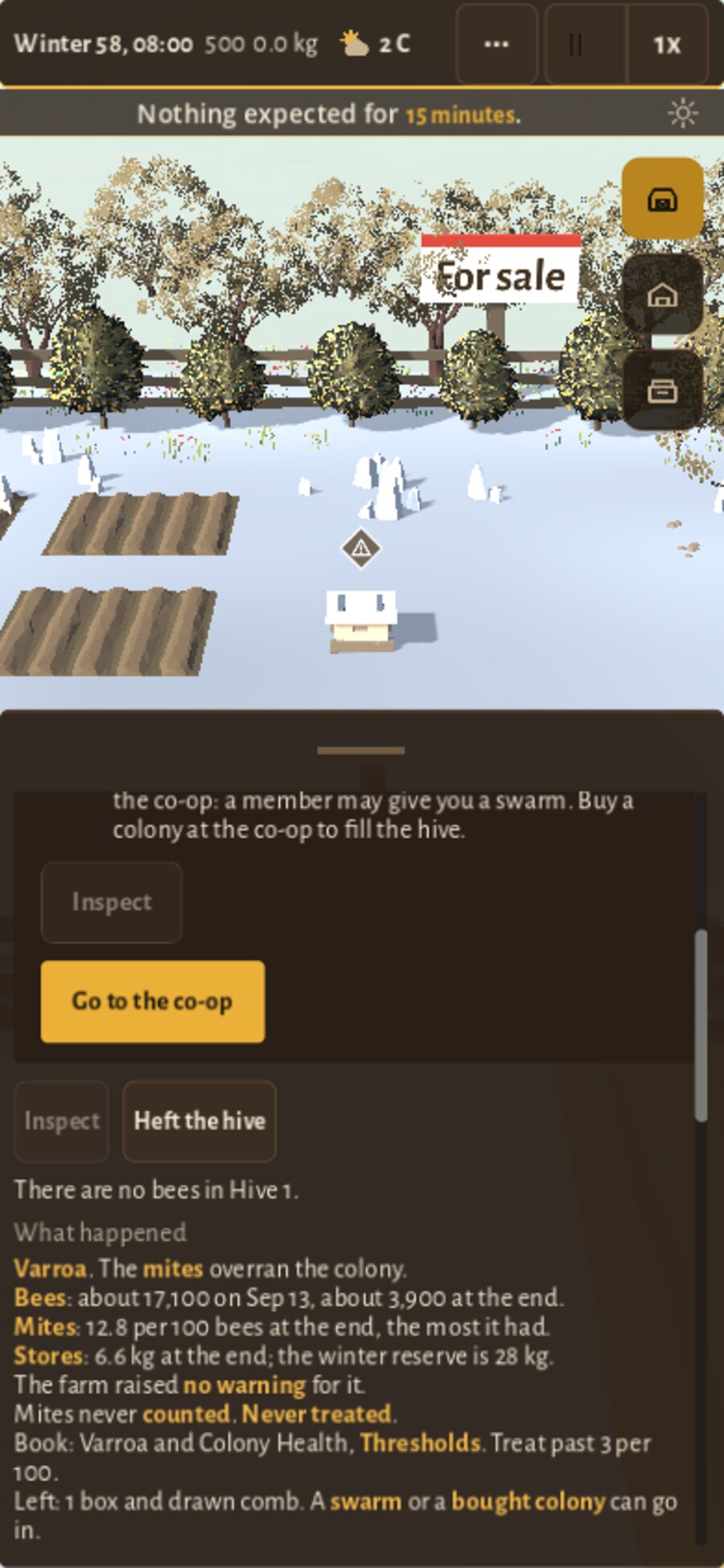
A dead colony’s post-mortem: mites overran it, they were never counted or treated, and the book that would have helped.
This is the feature I’d point to if someone asked what makes it a beekeeping game and not a farming game with bees in it. In real beekeeping you often find out in March what you did wrong in August. The game keeps that delay, then explains it.
Checking it against reality
A lot of the work went into checking the simulation against real beekeeping rather than against my intuition. Scripts play over a thousand beginner farms, each making different mistakes, to check that each mistake costs about what it would in real life.
That kind of measuring is also honest when the game has to bend reality. Swarming is a good example. The real lever a keeper has is giving the queen more room to lay, and the game models that. But the measurements showed beginners almost never got that far, so swarming would have been brutal for new players. The game keeps a rule that softens it, and calls it what it is: a playability choice, not biology.
How it’s built
It’s Godot with GDScript, exported for the web first, with phones and desktop to follow. The art is low-poly 3D with a fixed camera, plus hand-drawn line icons.
Testing is a big part of it: thousands of unit tests for the simulation, and scripted “clips” that play through the real interface, tapping and scrolling and advancing time, then check what’s on screen.
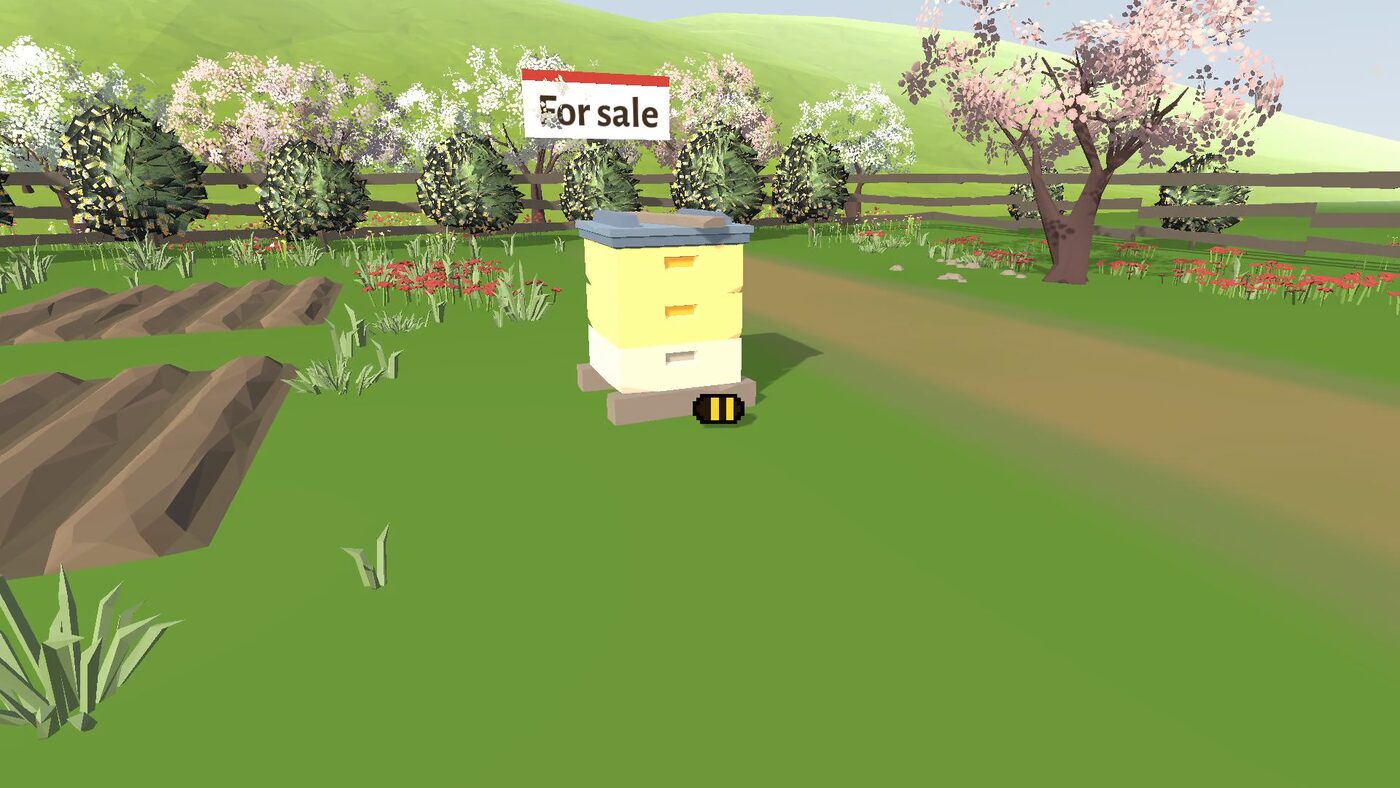
A frame from the trailer, “One hive, one year”.
How close is the end?
Most of the planned game is built, from the first hive to wax, mead, extra land, pollination contracts and three regions with their own weather and threats, along with what’s needed for a public web release.
What’s left is mostly decisions only I can make, and a mobile release. I’ll write again when it’s out.