Posts
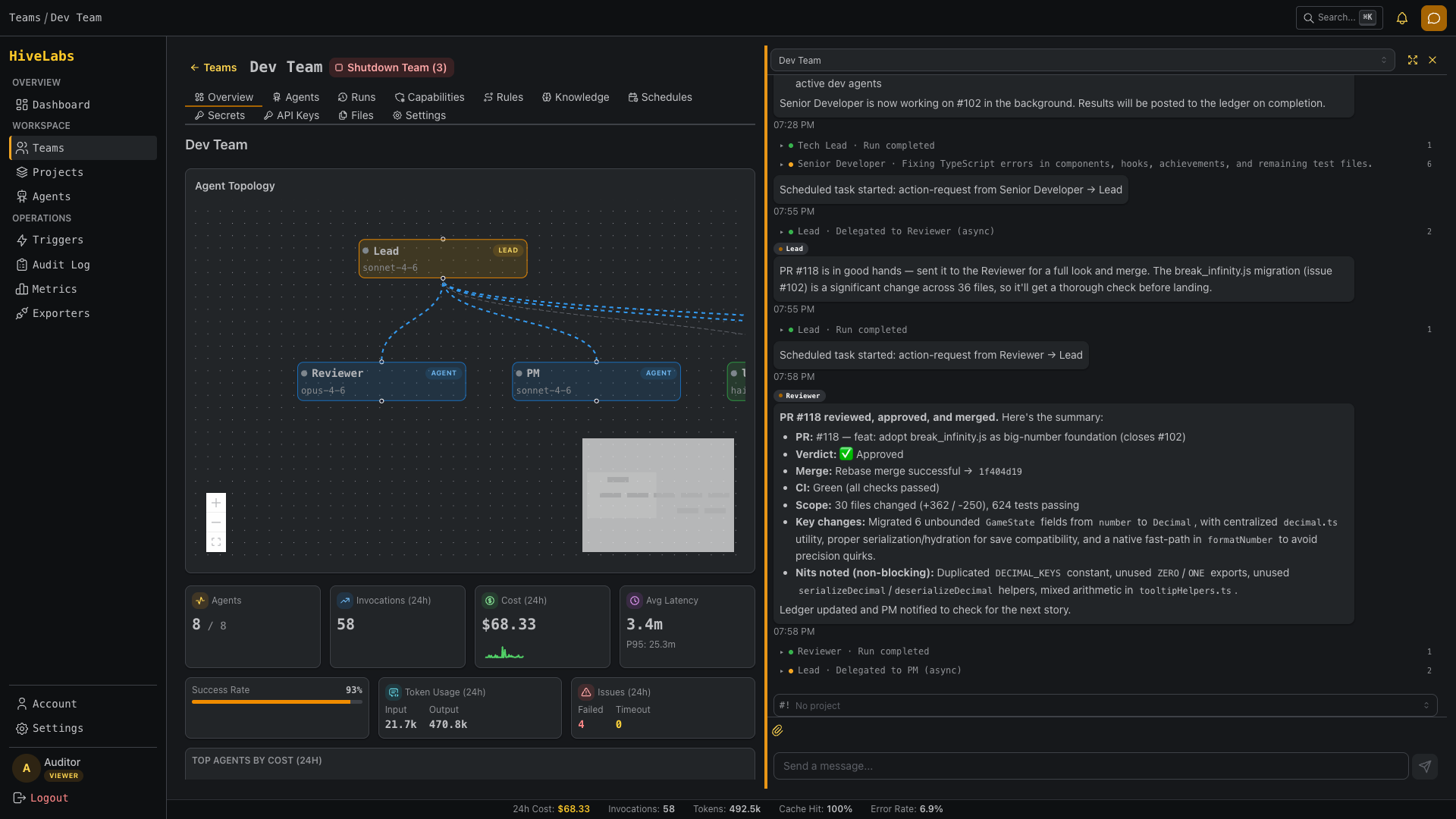
Building HiveLabs: Taking the AI Agent Team Concept to Production
A couple of weeks ago I wrote about 4shClaw, a personal multi-agent AI assistant running with Docker. It works. Agents spin up in containers, coordinate through a shared ledger, and build a game called GLORP autonomously. The architecture proved out the core ideas: container isolation, declarative capabilities, ephemeral agents, lead-agent orchestration. But 4shClaw is a personal tool. Single user, SQLite, filesystem IPC, Node.js host. That’s fine for me. It’s not fine for a team of five engineers at a fintech company who want the same thing on their infrastructure, with audit trails their compliance team will accept. ...
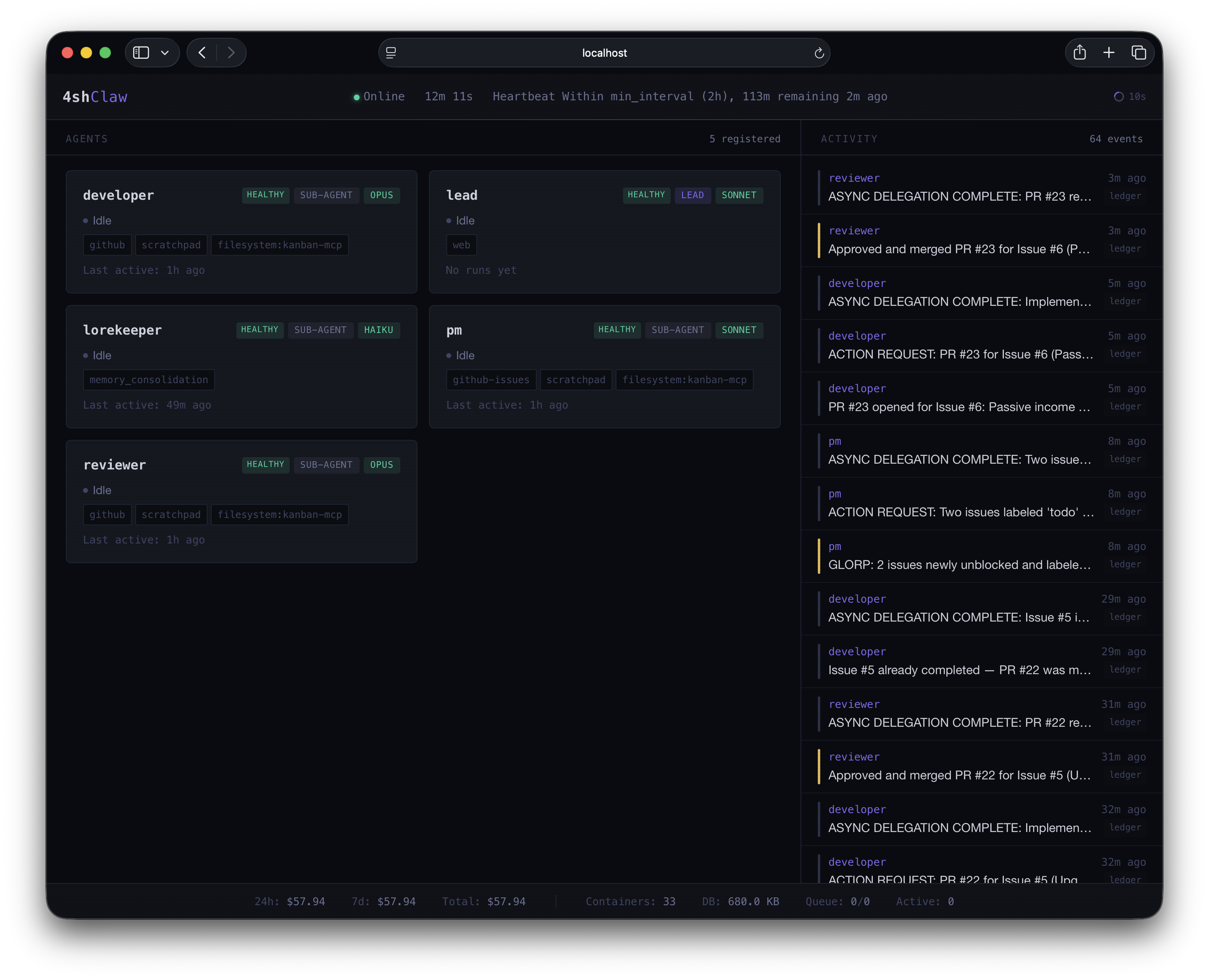
Building 4shClaw: A Multi-Agent AI Assistant That Runs Your Life (and Builds Its Own Demo)
I’ve been trying to build personal AI assistants on and off for a while. Bots backed by LLM APIs, cron jobs that would run some automated task. None of them stuck really. Then OpenClaw came along and kicked off the personal AI assistant movement. It looked like what I wanted, until I looked under the hood. The thing wants access to everything: your email, your calendar, your GitHub, your files, all funneled through a single Node.js process with shared memory and no real isolation. One bad prompt injection through an email summary could, in theory, access your GitHub token, your calendar credentials, and every other secret the system knows about. That’s not a hypothetical either: multiple critical CVEs in 2026 alone, all stemming from the same architecture. ...

Why I'm Building Codex: A Digital Library Server in Rust
I love Komga. It’s been my go-to for managing comics, manga, and ebooks for years, and it genuinely does the job well. The UI is clean, the feature set is rich, and the community around it is great. If you self-host a digital reading collection and haven’t tried it, you should. But after years of daily use, I kept bumping into a few limitations that I couldn’t work around. And eventually, the itch to build something of my own became too strong to ignore. ...

Bee AI n8n Workflows
The n8n-nodes-bee-ai Package Blog Post: Bee AI n8n node Github Repo: AshDevFr/n8n-nodes-bee-ai Sub Workflows to fetch them all Bee AI - Fetch all Conversations Note: the Conversation model is a nested object, so because of that, I added a code node to flatten the results. Conversation (GET /v1/{userId}/conversations/{id} response): { "conversation": { "id": 3456789, "summary": "...", ... } } Bee AI - Fetch all Facts Bee AI - Fetch all Todos Bee AI - Fetch all Locations Workflows Bee AI - Backup v2 Uses the Fetch all x workflows to get all the data, then insert it into a MongoDB database anf a json file in Google Drive. ...

Bee AI n8n nodes
I recently developed a custom n8n node package that connects Bee AI with the n8n workflow automation platform, opening up new possibilities for automating personal AI data. What is Bee AI? Bee AI is a wearable personal AI device that sits quietly in the background, capturing and processing your daily interactions. Unlike traditional smart assistants that require explicit activation, Bee continuously learns from your conversations, tasks, and locations, transforming these moments into actionable insights, summaries, and reminders. ...
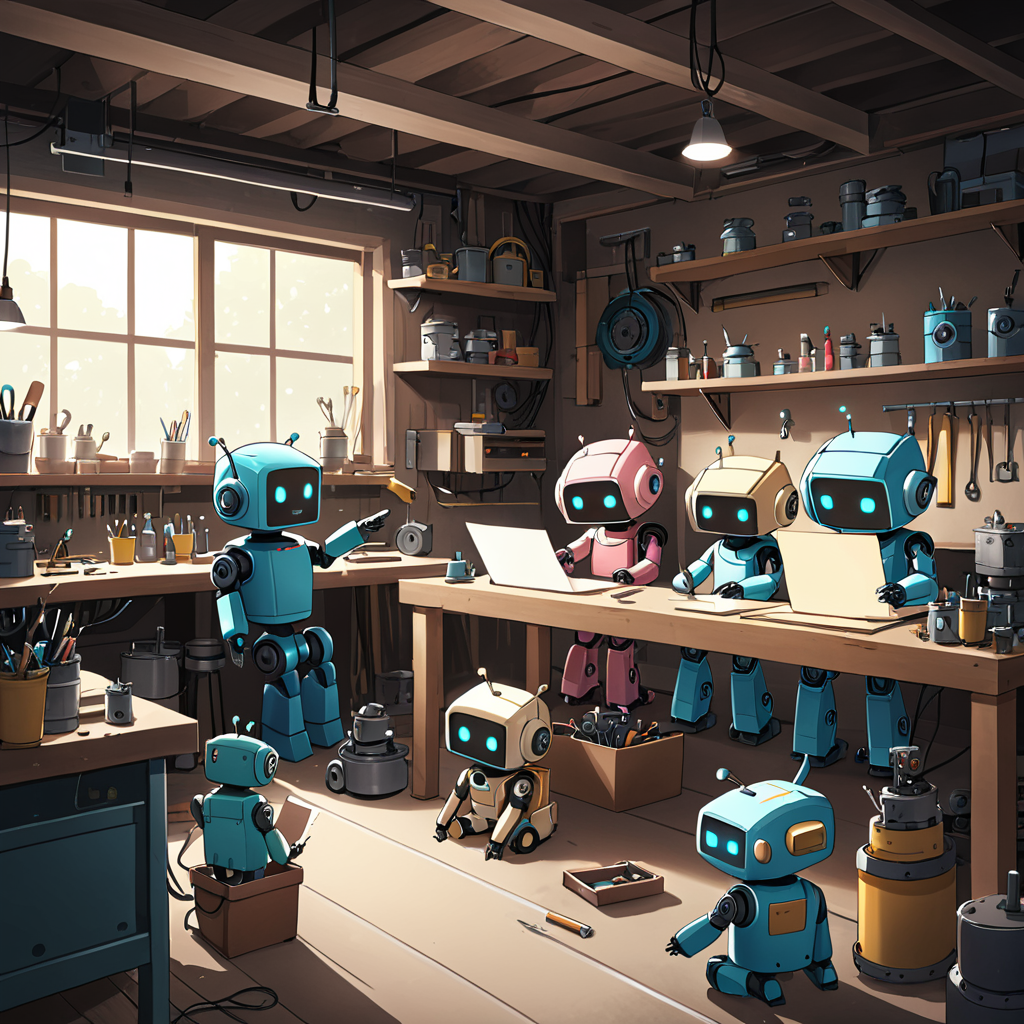
RAG Agents with LangChain and LangGraph
Self-RAG (Self-Reflective Retrieval-Augmented Generation) is a framework that combines the benefits of retrieval-augmented generation (RAG) with self-reflection, allowing large language models (LLMs) to adaptively retrieve passages on-demand and generate more accurate responses. Langgraph recently published a blog post on Self-RAG with their own implementation. I really like the idea of validating the retrieved information. In that past I have noticed that, while vector databases will return documents that usually match the input query string, some may contain irrelevant content. Having the ability to validate and correct this is a great feature for any RAG setup. ...

Adventures in Greenhaven
I recently published my first tabletop role-playing game (TTRPG) designed specifically for young hearts, Adventures in Greenhaven. This project matters to me because I want to make tabletop gaming accessible and enjoyable for kids. I’ve always been passionate about sharing the magic of D&D with others, but as my children grew older, I realized that traditional D&D wasn’t quite suitable for them yet. So, I decided to create a game that captures the essence of D&D, but with simpler rules, more accessible storytelling, and a focus on fun and adventure. ...
Game Dev - Unity
After spending years trying to build mini D&D games using JS, Elm, Elixir, etc… I decided to give a shot to Unity. Dungeon generator I decided to jump right away into Unity and build a procedural dungeon generator from scratch. As expected the result was not great (pretty ugly let’s be honest). It’s not that C# is difficult, but you have to learn a new tool (Unity) which comes with a lot of new concepts and options that if you don’t know makes your task more complex. ...
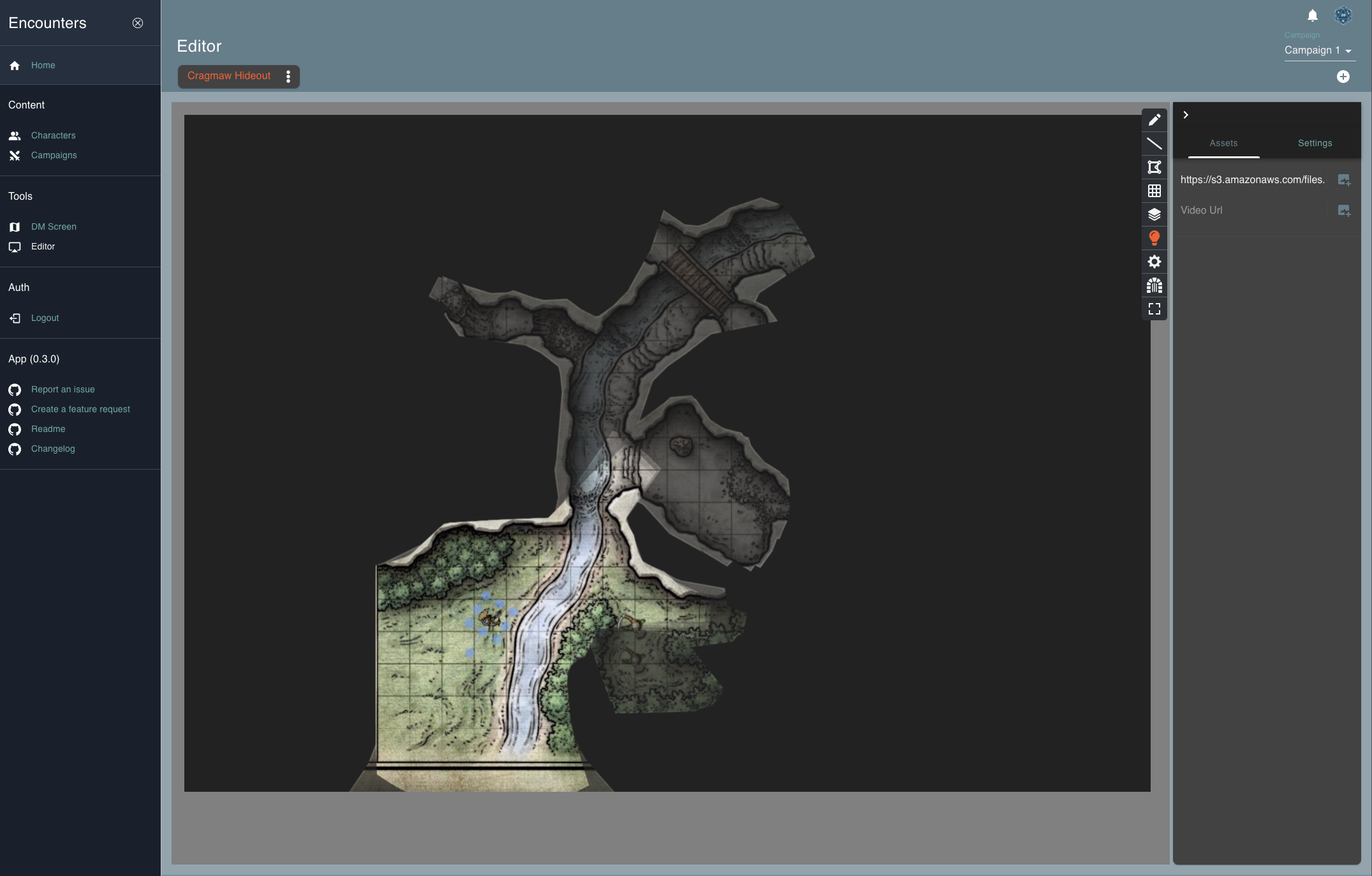
Encounters v0.3.0 (Alpha) - Dynamic lightning is coming
It’s been few weeks since my last update. I have been quite busy working on a lot of interesting stuff. Some related to this project, some a bit less. Here is a preview of the Dynamic lightning I have been working on. It’s not live for now since it needs a lot of small adjustments before being 100% usable.
From Kubernetes to Gitlab-ci in less than 10min
I have been playing a lot with Kubernetes lately, from creating a cluster from scratch on bare metal, setting up a ELK stack, Prometheus metrics to setting up a CI/CD using Gitlab CI. I found the last one so easy that I made a video for it. I have been using a DigitalOcean Kubernetes cluster for this video, it was super easy and I got $100 to play with it for 60 days. ...